SOLIDWORKS
From design parameters to a part and drawing.
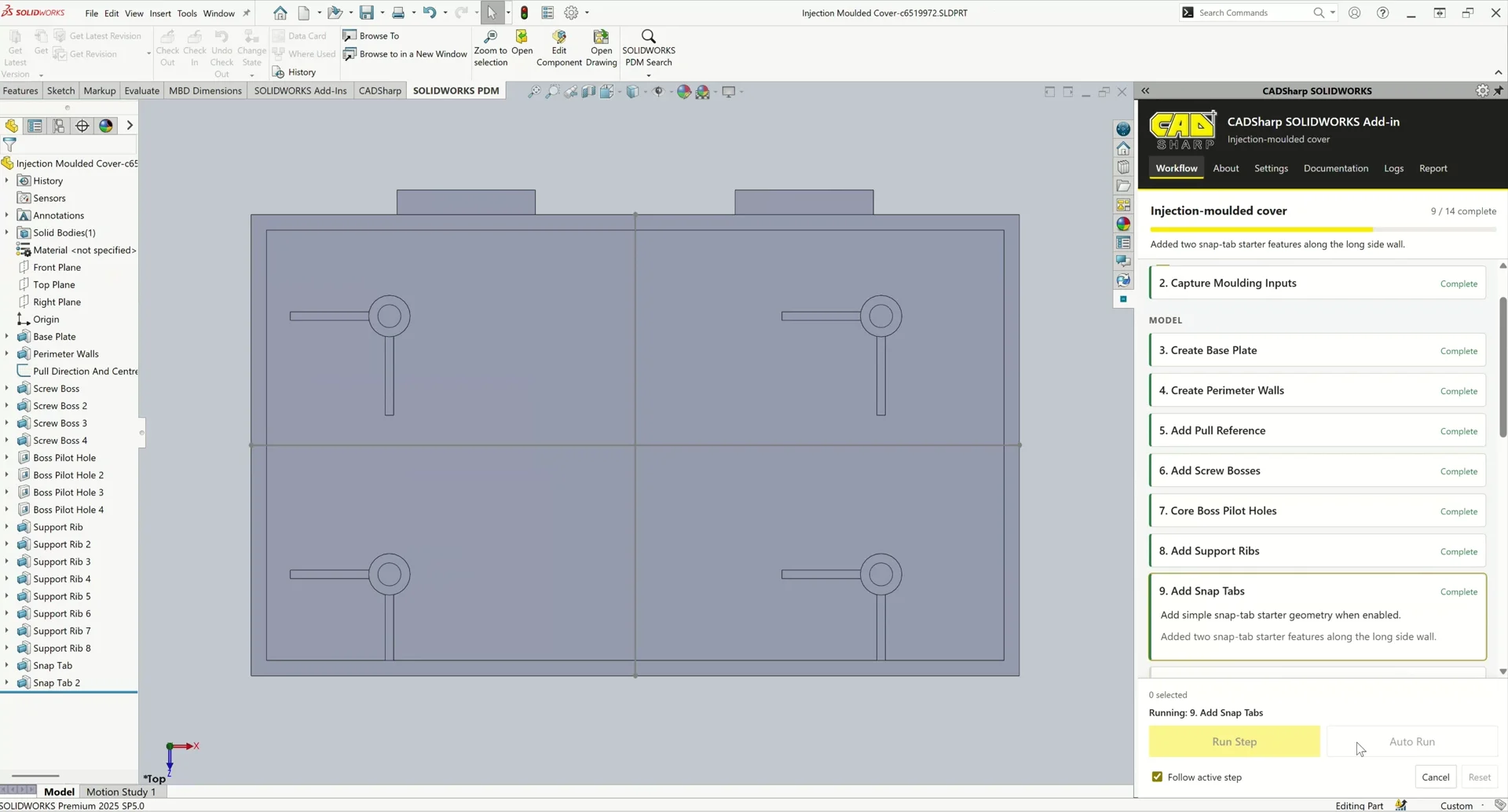
A custom add-in guides an injection-molded cover workflow, including modeling operations, a manual moldability review, and drawing creation.
Watch demonstration
OUR WORK
Watch our CAD tools, explore design examples, and learn what working with our team involves.
SELECTED WORK
These examples show our own tools and design work. Talk to us about a similar task in your engineering environment.
SOLIDWORKS
A custom add-in guides an injection-molded cover workflow, including modeling operations, a manual moldability review, and drawing creation.
Watch demonstrationOnshape
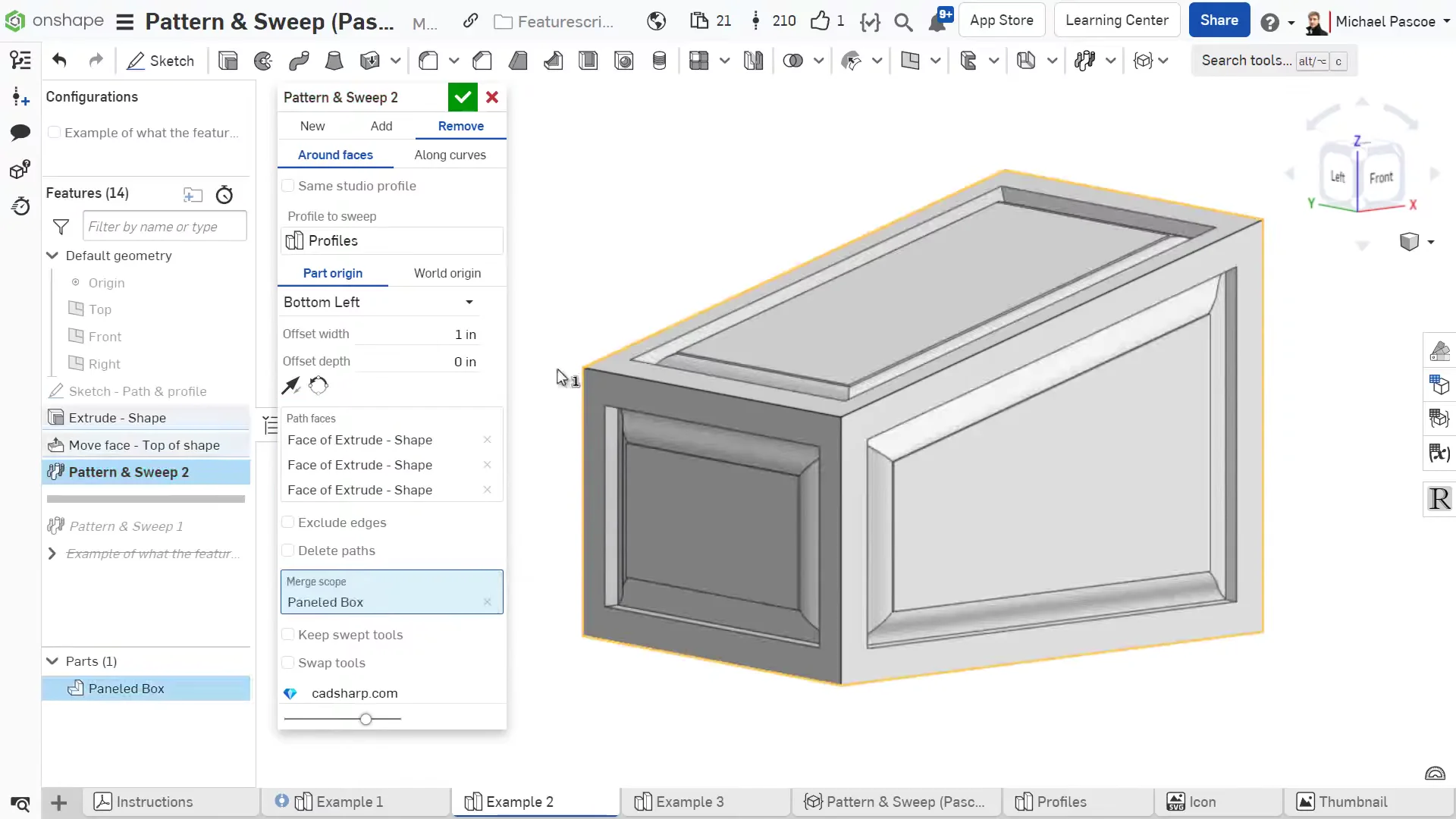
CADSharp’s Pattern & Sweep FeatureScript applies a profile along multiple paths to turn a plain box into a paneled enclosure.
Watch demonstrationSolid Edge
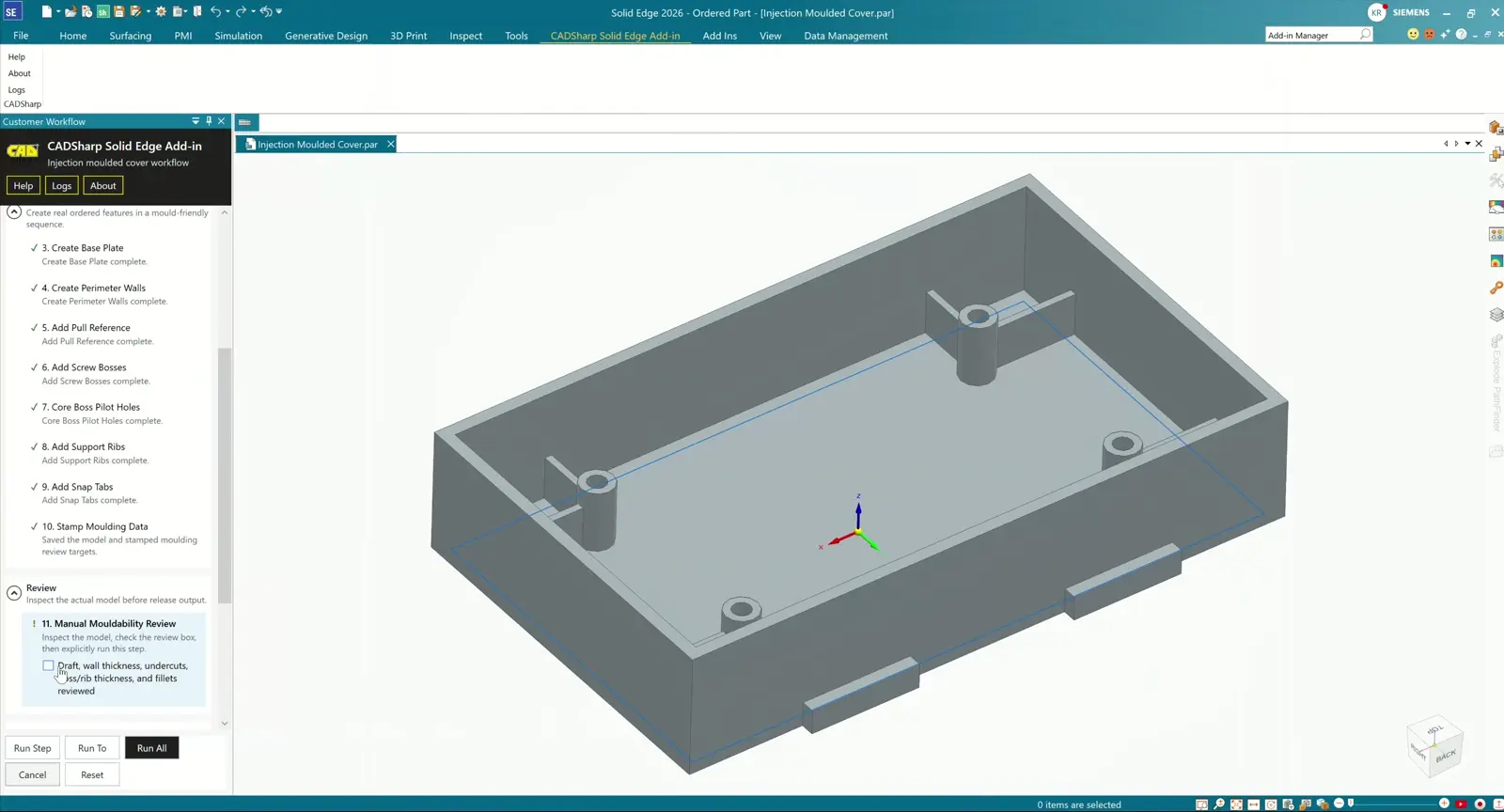
A CADSharp add-in takes the operator through cover parameters, modeling steps, engineering review, and drawing operations inside Solid Edge.
Watch demonstration ↗Creo
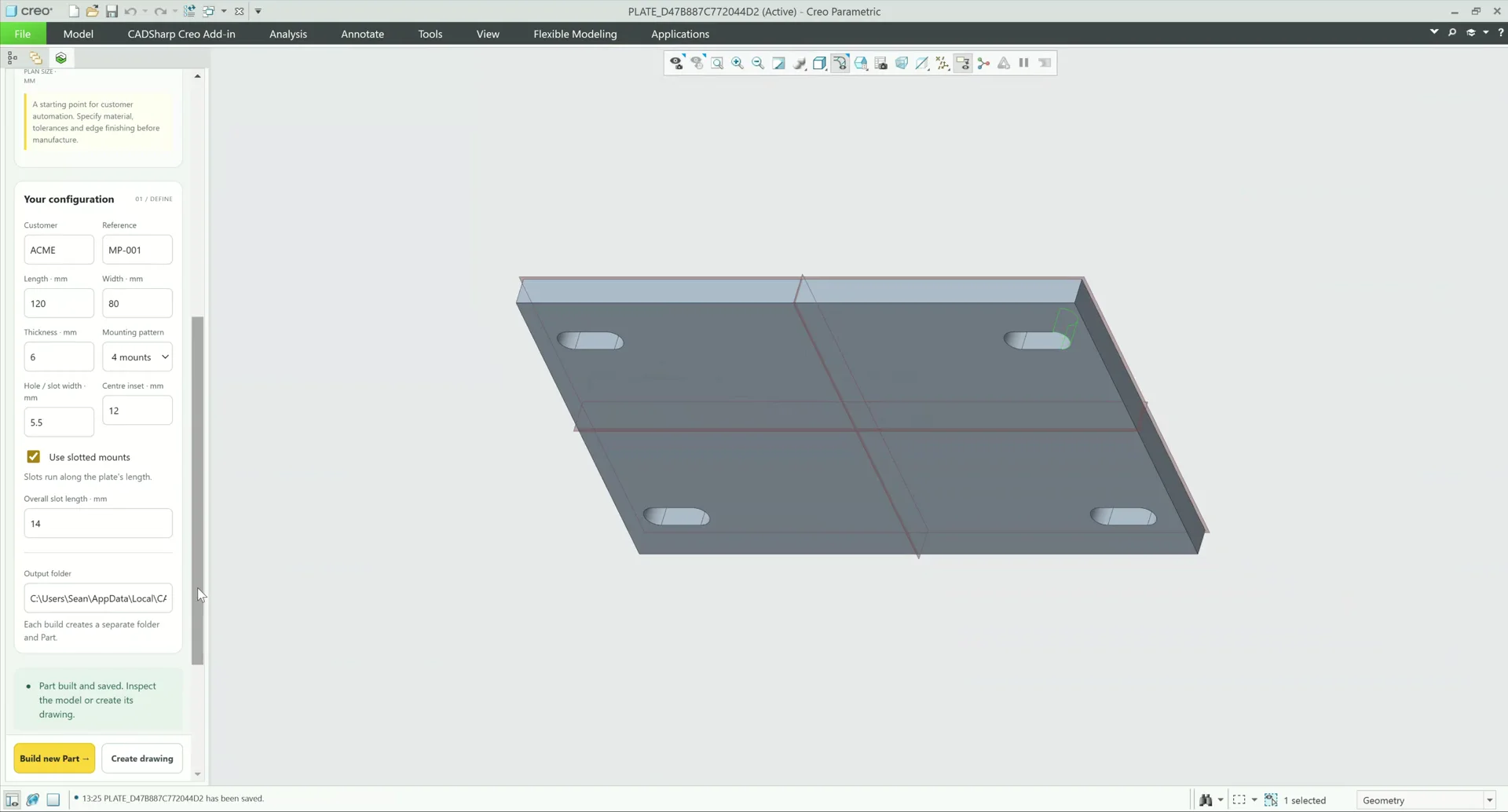
A custom CADSharp Creo add-in configures a mounting plate, builds the part with slotted mounts, and creates a drawing.
Watch demonstration ↗CAD migration
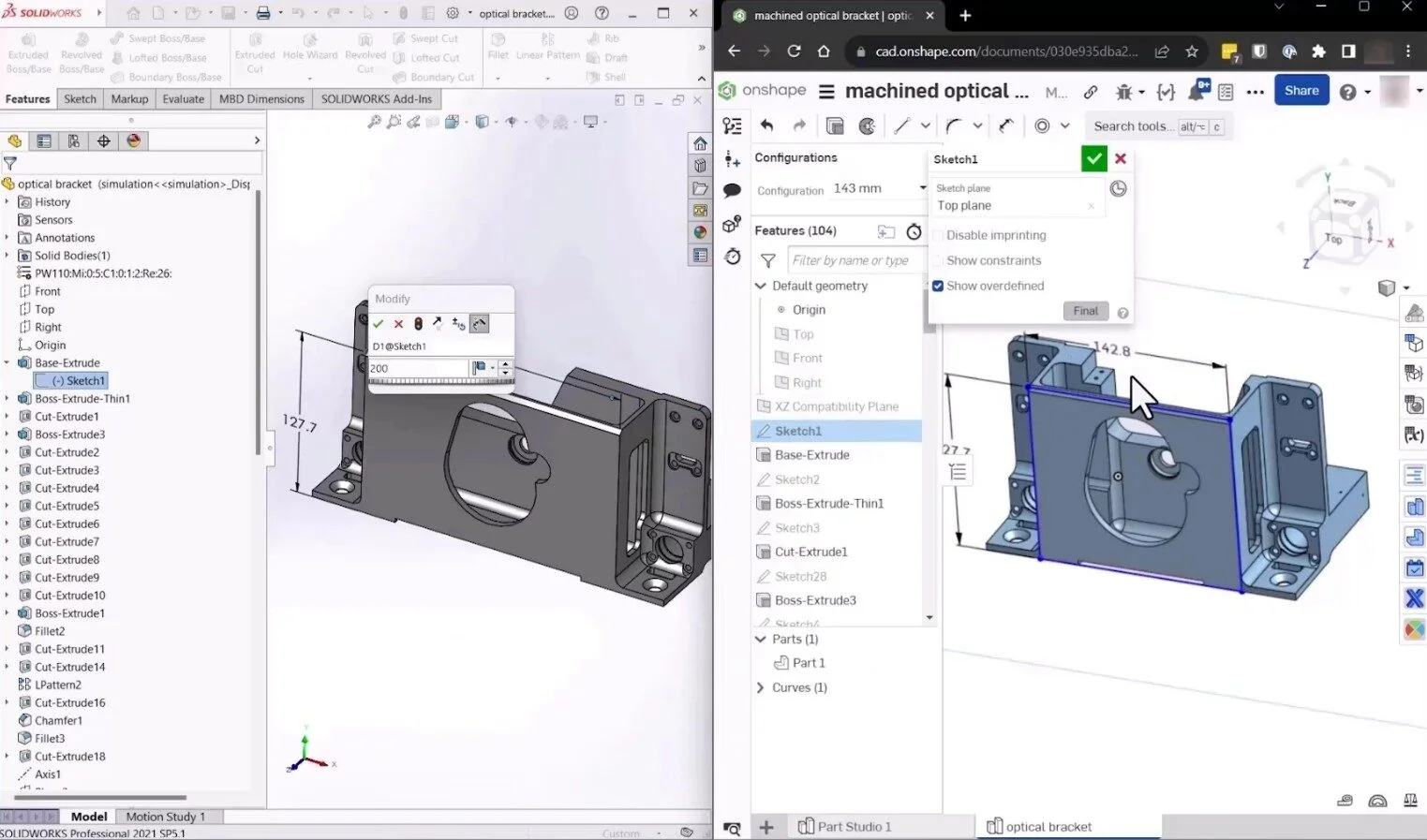
Compare a source design and its recreation in Onshape, then explore when automated transfer or feature-based recreation is appropriate.
Compare migration approaches ↗Mechanical design
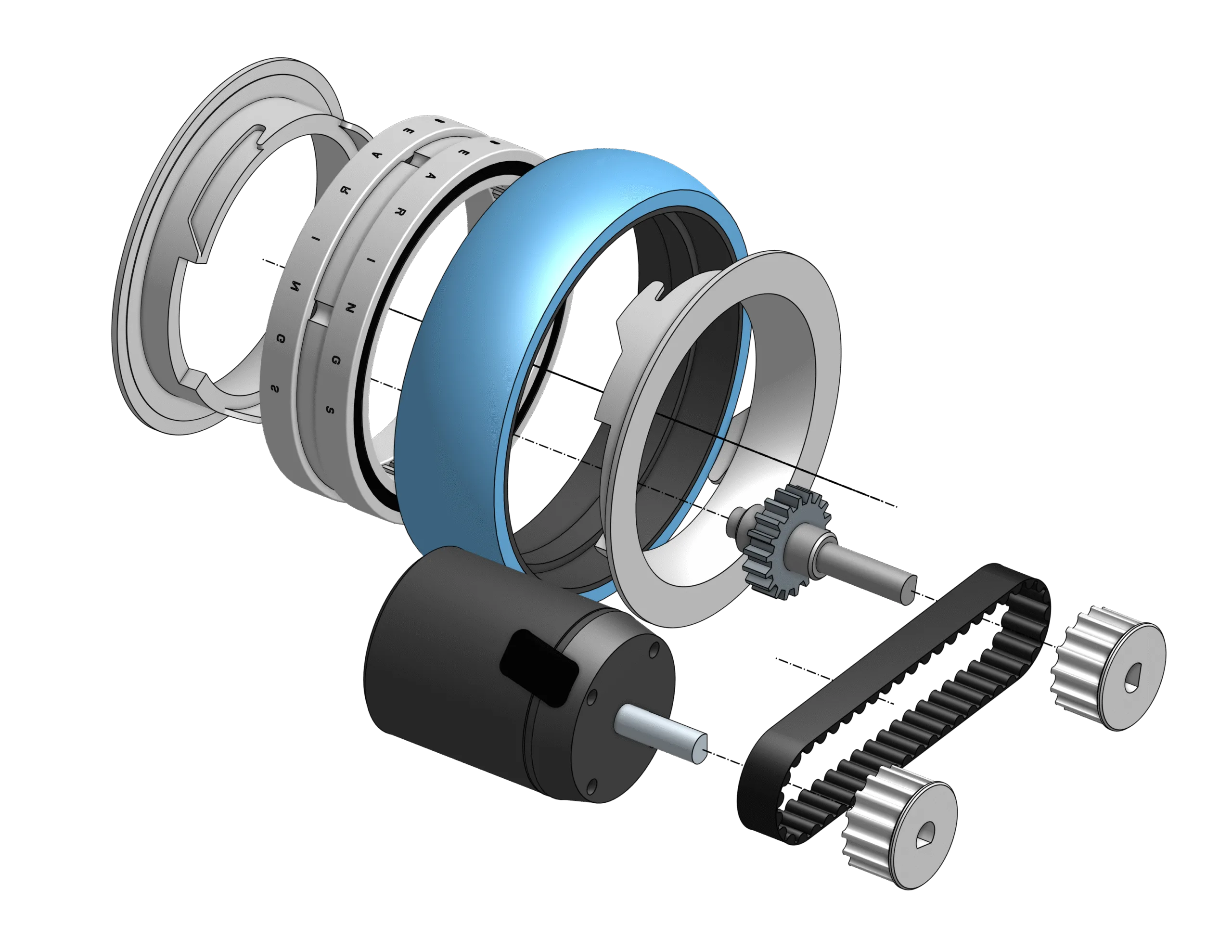
An exploded rear-wheel assembly from CADSharp’s mechanical design portfolio illustrates the modeling and assembly work behind a complete mechanism.
View mechanical design ↗HOW WE WORK
Work directly with the people delivering your project. Agree what success looks like, review the work as it develops, and plan the handover together.
We review the workflow, systems, and constraints. You bring a representative task and the outcome your team needs.
Together, we agree deliverables, responsibilities, and acceptance checks. Technical uncertainty may call for discovery or a proof of concept first.
We develop the solution around agreed review points. Your team checks progress and provides feedback as the work takes shape.
Together, we check the requirements in the intended environment and complete the source, documentation, deployment, or training included in scope.
BEFORE WE BEGIN
Start with a conversation. We’ll work through the technical and commercial questions with you.
A non-confidential outline is enough to start. Describe the workflow, your engineering systems and versions, the users or data involved, and any timing or budget constraints. A complete specification is not required.
Yes. Tell us if you need an NDA. Agree confidentiality terms and an appropriate way to share data before providing proprietary CAD files or sensitive documents. Keep credentials out of the inquiry form.
The proposal reflects scope, technical uncertainty, system access, and agreed deliverables. Discuss timing and commercial constraints during scoping. Where feasibility is uncertain, define discovery before estimating implementation.
Agree ownership, source-code delivery, reuse rights, and third-party dependencies in the commercial agreement. Demonstrations and freely accessible learning resources do not establish the terms of a customer project.
Bring IT, security, deployment, and procurement requirements into discovery. Agree data handling and access responsibilities before sharing data or granting access. Define documentation, deployment, training, warranty, maintenance, and future software-version changes in the engagement scope.
Tell us which task or engineering problem you need help with.