CAD MIGRATION & TRANSLATION

Move your models to a new CAD system.

Plan and execute a CAD transition with specialists in software, engineering data, and mechanical design. Choose the right approach for your models, assemblies, metadata, and drawings.

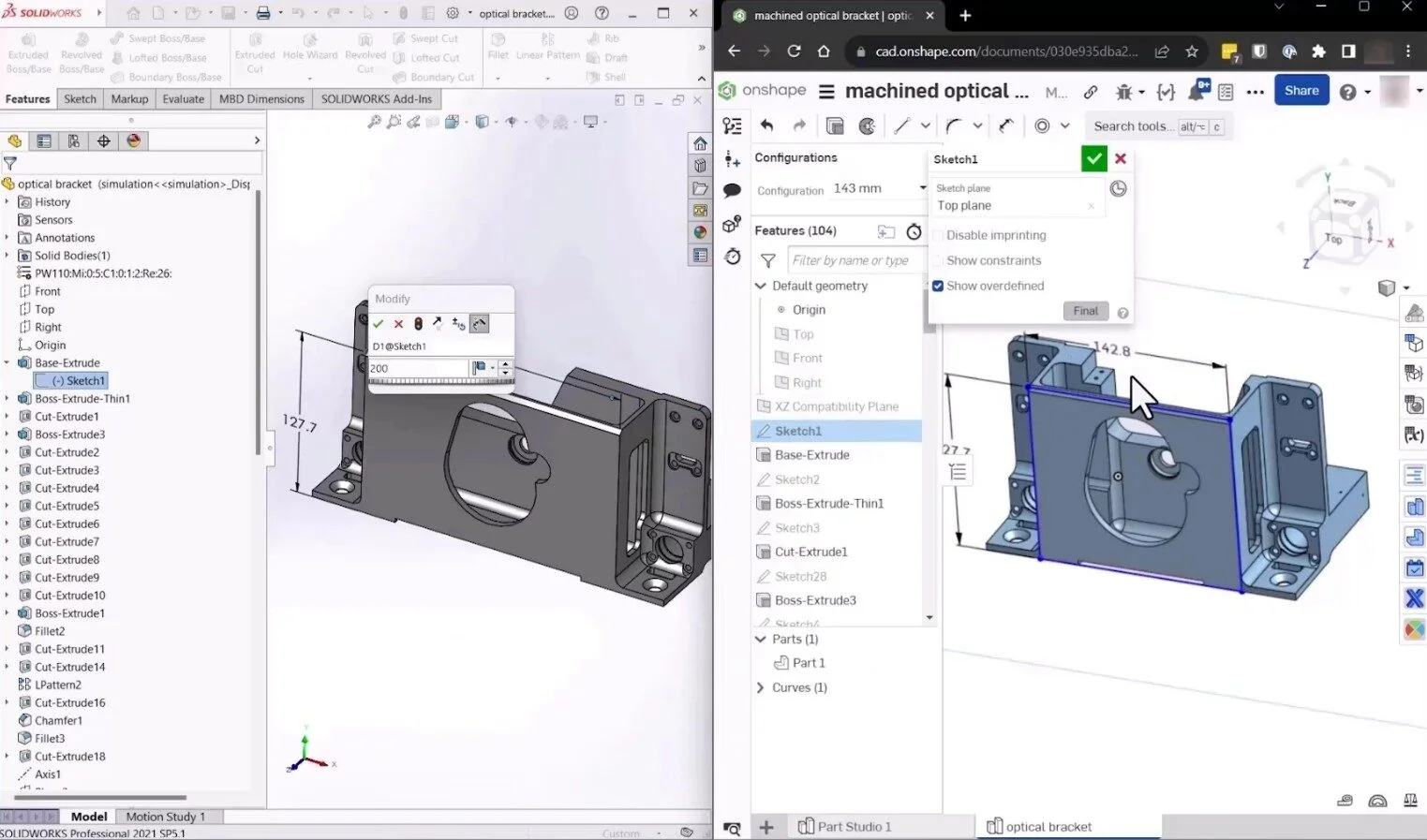
CADSharp example of model translation between CAD systems
CAD translation example from CADSharp’s existing migration service.

EXPERIENCE AT SCALE

From bulk geometry
to feature-based recreation.

300,000+Neutral geometry migrations
1,000+Feature-based translations

Published migration volumes as of summer 2026.

AUTOMATED MIGRATION

Bulk geometry and metadata transfer

Use software-assisted workflows to move geometry and metadata in bulk. Define transformations, preserve relevant structure, and validate the result against agreed requirements.

  • Neutral geometry and metadata
  • High-volume model and assembly workflows
  • Validation and exception review

MANUAL PARAMETRIC RECREATION

Editable model recreation

Have skilled designers recreate models in the target system when editable features and design intent matter. A project can combine manual recreation and bulk migration.

  • Feature-based models in the target CAD system
  • Modeling practices appropriate to the new platform
  • Drawings and design intent considered separately

A PRACTICAL MIGRATION PROCESS

Planning and carrying out a migration

01

Discover

Review your source and target systems, representative models, data volumes, and requirements.

02

Define the approach

Determine which data needs bulk migration, manual recreation, or reference-only preservation.

03

Execute

Apply the agreed tooling and design workflows, handling exceptions as they arise.

04

Validate & hand over

Check agreed geometry, metadata, assembly, and drawing requirements before handoff.

Questions about your transition

Which CAD systems can you help with?

Our migration tooling supports workflows involving SOLIDWORKS, Onshape, Solid Edge, Fusion, and Inventor. Support depends on the source and target systems, file versions, and data requirements, which we assess using representative models during discovery. NX, Creo, and CATIA workflows may require further development; we confirm feasibility and scope before committing to a migration.

What happens to drawings?

Drawings that must remain parametric may need manual recreation. Legacy drawings needed for reference can be retained as PDF or DXF, depending on the project requirements.

How do we get started?

Tell us your source and target systems, approximate data volume, and objectives. Discovery can include an NDA and review of representative low-, medium-, and high-complexity models before defining scope.

Is this an off-the-shelf migration product?

We offer migration services and can discuss custom tools for your licensed environment. This service is separate from our publicly offered SharpSync and PDM Macro Tasker products.
Planning a CAD transition?

Talk with us about your systems, your data, and what needs to move.

Discuss your migration ↗